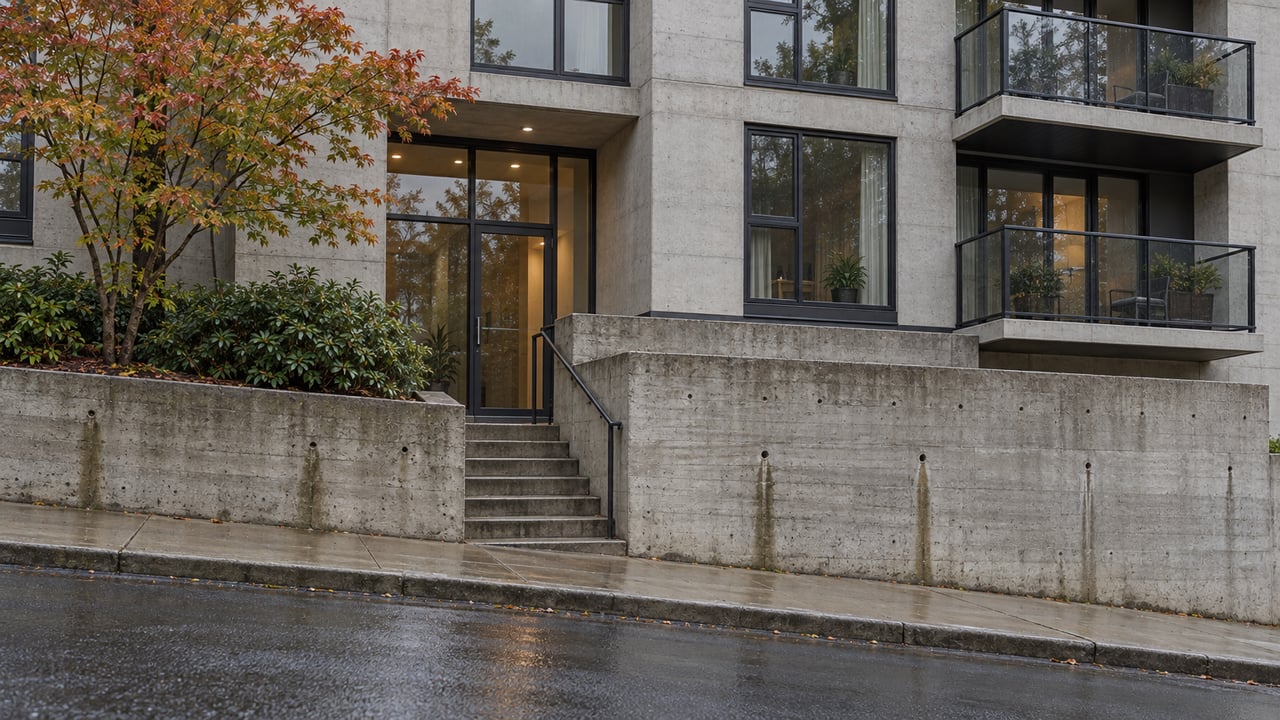
A house on Queen Anne's west slope rarely sits on flat ground. The lot steps down toward Elliott Bay or the Ship Canal, so the builder cut into the hill: a stepped foundation here, a retaining wall there, a daylight basement tucked under the living room, a driveway carved at an angle steep enough that the listing photos never quite capture it. None of this is unusual for the neighborhood. It's how Queen Anne got its views. But it also means a house here carries a different inspection list than a comparable house three miles away on level ground, and for most of the last few years, buyers didn't have the room to use that list.
That's changed. Seattle moved into a genuine buyer's market this September, the first time inventory has run this loose since January 2012. For most of the city, that shift means more time to compare finishes and negotiate price. On Queen Anne's slopes, it means something more specific: buyers finally have the calendar room to do the inspection work the terrain has always required, instead of waiving it to compete.
The topography that decides your inspection list
Seattle's Department of Construction and Inspections requires a permit for any retaining wall over four feet, measured from the footing to the top of the wall. Walls shorter than that aren't automatically exempt either. Any wall built in an Environmentally Critical Area, which includes steep slopes of 40 percent or greater and mapped landslide-prone zones, can require a permit and engineering review regardless of height. So can a wall carrying a "surcharge," which is any load behind it beyond the soil itself: a driveway sitting above the wall, a patio, a sloped lawn pushing laterally, a shed or foundation bearing down on it. Skipping engineering on a surcharged wall is one of the more common causes of wall failure in Seattle, and it's the kind of detail a standard home inspection doesn't flag because it isn't built to.
Queen Anne shows up by name in the industry's own list of neighborhoods where this overlap matters most, alongside Magnolia and West Seattle. If a lot falls inside a steep-slope or landslide-prone critical area, and a lot of Queen Anne's slope stock does, a licensed geotechnical engineer's report becomes part of the permit file for almost any structural work on the property. Those reports typically run $8,000 to $20,000, and they're not a formality. They inform how a foundation gets designed, how drainage gets routed, and whether a buyer's renovation plans are even feasible before a shovel goes in the ground.
None of this shows up on a standard pre-listing disclosure in a way that a buyer moving fast would catch. It shows up when someone pulls the retaining wall's permit history, checks whether the lot sits inside a mapped critical area, and asks whether any structural work happened without the geotechnical sign-off the city would have required.
What a waived contingency actually skips
A general home inspector checks the roof, the systems, the structure you can see. On a Queen Anne slope lot, two things sit outside that scope entirely.
The first is the side sewer. A sewer camera scope is often treated as optional on flat ground, where a bad line is an inconvenience. On a sloped lot, a compromised side sewer can trigger steep-slope overlay review before repair even starts, and the excavation costs climb into five figures fast once a crew has to work around retaining structures and grade. A scope that comes back clean for the first stretch of pipe and then finds a problem further down is a documented pattern on hillside lots in this city. It's exactly the kind of finding a waived inspection period never has time to surface.
The second is shared access. Queen Anne's older plats, many dating to the early 1900s, often carry a recorded easement or a Joint Maintenance Agreement covering a shared driveway or a party wall between two houses built close together on a narrow slope lot. These documents predate almost everyone currently living on the block, and they spell out who pays for what when the shared driveway needs regrading or the retaining wall holding it up starts to fail. The terms vary from one recorded document to the next, which means the only way to know your actual obligation is to read the specific agreement attached to the specific lot, something a buyer under contract for seven days doesn't have time to do carefully.
Here's what that difference looks like side by side:
| What's involved | Typical flat-lot Seattle home | Queen Anne slope lot |
|---|---|---|
| General inspection | Structure, roof, systems | Same scope, but doesn't cover slope stability |
| Retaining walls | Rarely a factor | Common on stepped lots; over 4 feet needs a permit, and a surcharged wall can need engineering at any height |
| Geotechnical report | Not usually required | Required in mapped steep-slope or landslide-prone areas; licensed engineer's report typically $8,000 to $20,000 |
| Side sewer | Camera scope is optional | Worth treating as standard, since a failure on a slope can trigger overlay review before repair |
| Shared access | Uncommon | Older lots often share a driveway or party wall under a recorded easement or Joint Maintenance Agreement |
The market finally has room for this
Seattle entered September 2026 with 4.3 months of resale supply on one measure and 4.6 months on another, the first time the market has crossed the four-month threshold since January 2012. Average market time citywide reached 36 days, and the average listing is drawing 20.9 percent fewer showings than it did a year ago. That's a market where sellers compete harder for attention and buyers get to slow down.
Queen Anne itself hasn't loosened as much as the city overall. Through August 2026, homes here were still selling in about 19 days at a median of $1.0 million, down roughly 4.5 percent year over year. That's still one of the brisker pockets in Seattle, even inside a citywide buyer's market. Which means the extra room this fall isn't handed to a Queen Anne buyer automatically the way it might be in a slower submarket. It has to be used on purpose, in the days a buyer does have, rather than assumed because comps elsewhere are sitting longer.
For the last several years, a buyer competing for a Queen Anne listing often had to shorten or waive the inspection period entirely just to get an offer accepted. On a flat lot, that's a real risk. On a hillside lot with a retaining wall of unknown permit status, a driveway shared under a decades-old agreement, and a side sewer that's never been scoped, it's a much bigger one. The current market is the first time in over a decade that a Queen Anne buyer can ask for the days needed to check all of it without automatically losing the house to someone who won't.
What using the room actually looks like
An inspection contingency on a Queen Anne slope lot is worth structuring around the specific risks the terrain creates, not just the general condition of the house.
Before writing an offer, it's worth asking the listing agent whether any retaining wall on the property has a permit on file, and if the lot falls inside a mapped steep-slope or landslide area at all. SDCI's retaining wall guidance and its geotechnical report requirements are both public, and a buyer or their agent can check a specific address before ever touring the house.
A surcharge is any load behind a retaining wall beyond the soil itself. A driveway above the wall counts. A patio counts. A sloped lawn pushing laterally counts. That load determines whether the wall needs engineering, independent of how tall it is.
During the option period, a sewer scope is worth treating as close to mandatory on any slope lot, not an add-on reserved for older homes generally. And the preliminary title report deserves a specific read for language describing a shared driveway, a party wall, or a recorded maintenance agreement, since that's where the actual repair obligations live, not in the seller's disclosure form.
None of this adds much time to a transaction that already has 19 or 36 days to work with. It adds real information to a decision that used to get made without it.
A few questions this raises:
Does every Queen Anne home need a geotechnical report? Only if the lot falls inside a mapped steep-slope or landslide-prone Environmentally Critical Area, or if planned work requires one under the city's building permit review. Not every Queen Anne address qualifies, but a meaningful share of the slope-facing blocks do.
Is a sewer scope worth the cost if the seller already had one done? A pre-listing scope from the seller's side is useful information, but an independent scope during the buyer's own inspection period is the only way to know the line hasn't shifted or the seller's inspector didn't stop short of a problem area.
What if there's no recorded Joint Maintenance Agreement for a shared driveway? The absence of a recorded agreement doesn't mean there's no shared obligation. It means the terms default to whatever the easement language and Washington property law say, which is worth a conversation with a real estate attorney before assuming either side is off the hook.
If you're weighing an offer on a Queen Anne slope lot this fall, the retaining wall's permit history and the side sewer's condition are worth knowing before the inspection period closes, not after. homebysix can walk that list with you and help you request your personalized home valuation before you write the offer.